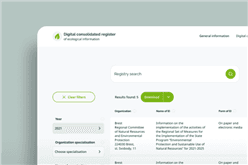
web-portal of the state data fund on the state of the environment

Environmental Information Register

The Unified Environmental Information Register is a strategic, nation-scale digital ecosystem that consolidates all climate data, land/resource registries, and corporate environmental reporting across Belarus. The PRAS team engineered and developed the centralized web platform and electronic registry, establishing the country’s primary analytical hub. We automated data collection from major industrial and corporate environmental stakeholders and deployed robust tools for seamless end-to-end monitoring, high-precision modeling, and long-term greenhouse gas emission forecasting for decades into the future.

task
Creation of a register of information on CO₂ emissions in Belarus
platform
The project has been implemented on a proprietary .NET web application management system
technologies
C#, ASP.NET Core, PostgreSQL, HTML, CSS, JS, AngularJS
release date
December 2023
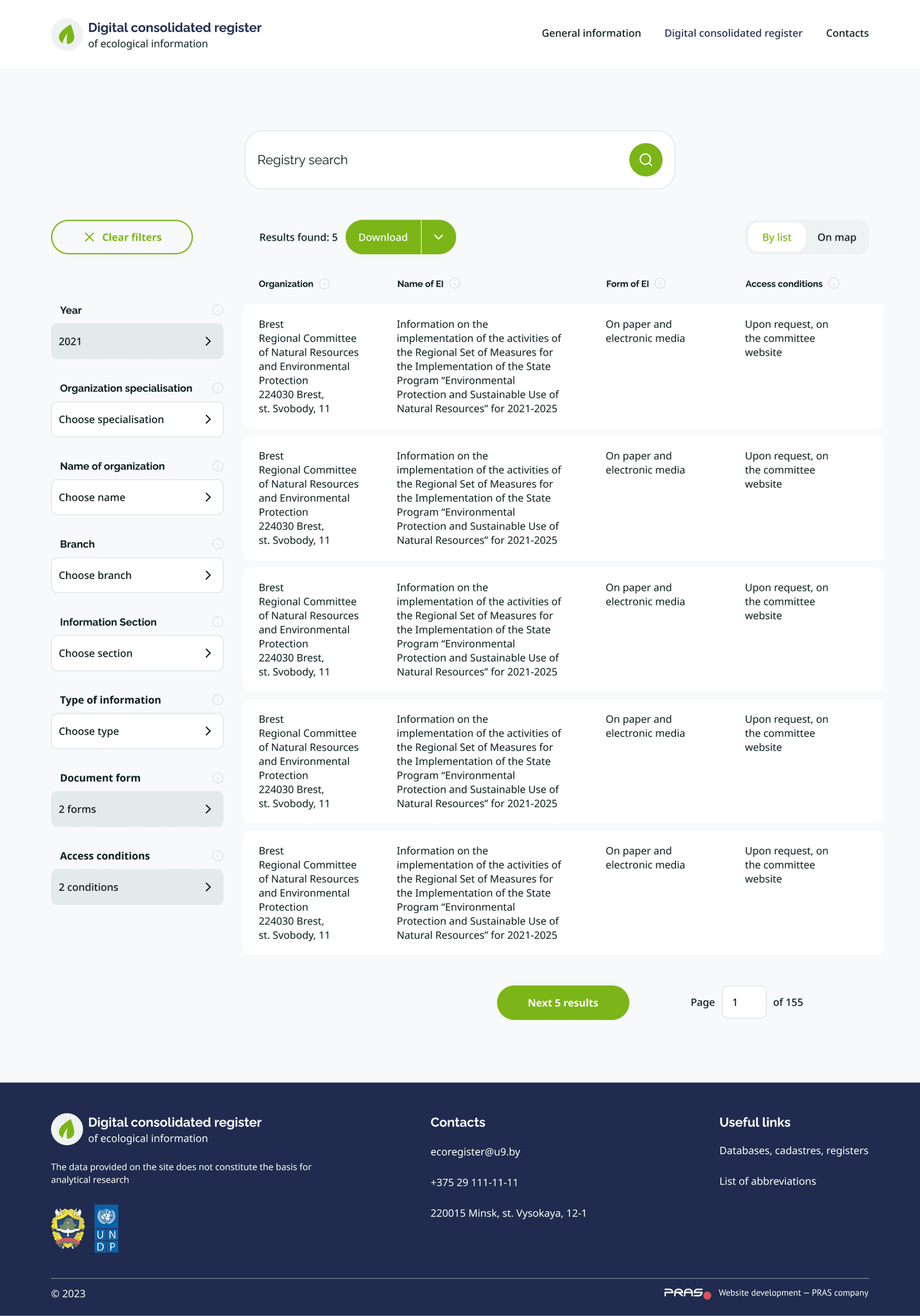
Main page of the project
Design of all web application pages
technical specifications and UI features
  • Automated Data Collection: a mechanism for seamless data retrieval from disparate institutional systems via software communication channels.
  • Update Optimization: software algorithms ensuring instant website responsiveness when processing and displaying massive datasets.
  • Geospatial Visualization: integration with mapping systems for precise monitoring zone visualization using vector graphics.
  • Automated Workflow: rigid structural logic for guiding environmental reports through mandatory verification and approval stages.
  • Dynamic Data Tables: flexible tools tailored for quick filtering, sorting, and cross-referencing pollution metrics across different years.
  • Change History Tracking: a comprehensive system tracing all registry modifications to guarantee data integrity and authenticity.
value for businesses and users
  • Centralized Access: a single point of entry for retrieving verified and approved state-scale environmental information.
  • Environmental Transparency: raising public awareness regarding the current quality of air, water, and soil in specific regions.
  • Reporting Efficiency: significantly reducing the time required to compile statutory documents through automated accounting.
  • Decision Support: a reliable analytical foundation for data-driven administrative and management decisions in environmental protection.
  • Public Oversight: intuitive tools enabling citizens to participate in monitoring and respond rapidly to incidents.
  • International Standard: high reliability and longevity of the digital system, engineered in strict compliance with quality frameworks.
next section of the site
in which

solutions developed by PRAS are demonstrated